
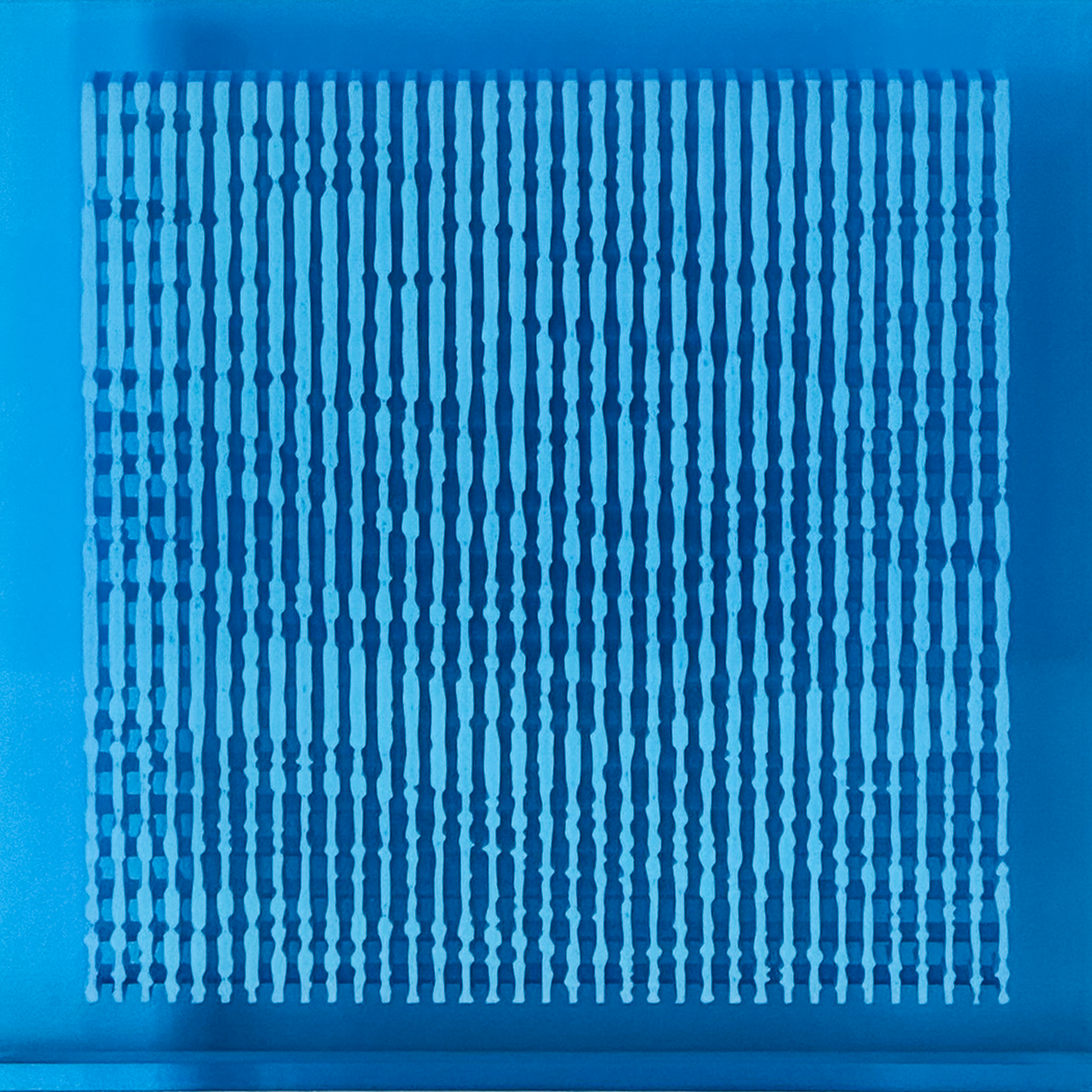
Most images today are designed for immediate recognition. We live in a time of visual speed! My work attempts the opposite. By layering incompatible systems of representation, it slows perception and resists instant comprehension. The goal is not confusion but attentiveness, to create a moment in which viewers become aware of the process of seeing rather than simply the object being seen.
Contemporary visual culture rewards speed. Images are encountered briefly, identified quickly, and replaced by the next image before sustained looking can occur. Recognition becomes the primary measure of success: we know what something is almost instantly, and that instant understanding often ends the encounter.

My work tries to interrupt that cycle. The layered structures: photographic clouds, pixelated overlays, architectural fragments, weather diagrams, and translucent drawing systems, do not align neatly with one another. Each proposes a different way of organizing the image, and the viewer must navigate between them. The eye moves back and forth, testing relationships, searching for coherence, and revising its understanding as it looks.

What interests me is not making the image difficult for its own sake. Rather, I want to create a condition in which perception becomes active and exploratory. When recognition is delayed, viewers become more conscious of how meaning is being assembled. The work asks for a slower form of attention, one that allows uncertainty to remain long enough for the act of seeing itself to become visible.

Leave a Reply